

Parole boards · Secretariats · Victims
Board papers for members only, and victim submissions that travel one way.
Members read each meeting's papers at View only, and their access ends after the meeting. Victims send submissions through a secure link that shows them nothing in return.
- Who it's for
- Parole board secretariats, members and victims.
- Members' papers
- View only, until after the meeting.
- Victim submissions
- A one-way link or QR code. No account needed.
- Staff names
- Recipients see aliases, not your staff.
Why parole papers are hard to handle
Parole decisions draw on psychiatric and intelligence reports, and on victims' accounts of what the offense did to them.
Today
- Printed packs and emailed PDFs in members' homes
- Victim statements posted or emailed in
- Staff names travel with every paper
- No record of who read what
With DekkoCORE
- Members read in the browser, with nothing to keep
- Victims upload through a link that shows them nothing
- Recipients see a consistent alias for each staff member
- Every view recorded against the file
How it works in DekkoCORE
One board meeting, from preparing the papers to the end of members' access.
Step 1
Set up the meeting's folder
The secretariat adds each meeting's papers to their own folder in the board's Hub.
- Hub folders
Step 2
Collect victim submissions
Send each victim a submission link, or print its QR code on a letter. They upload a statement and files, and see nothing else.
- Submission link
- QR code
Step 3
Share with the members
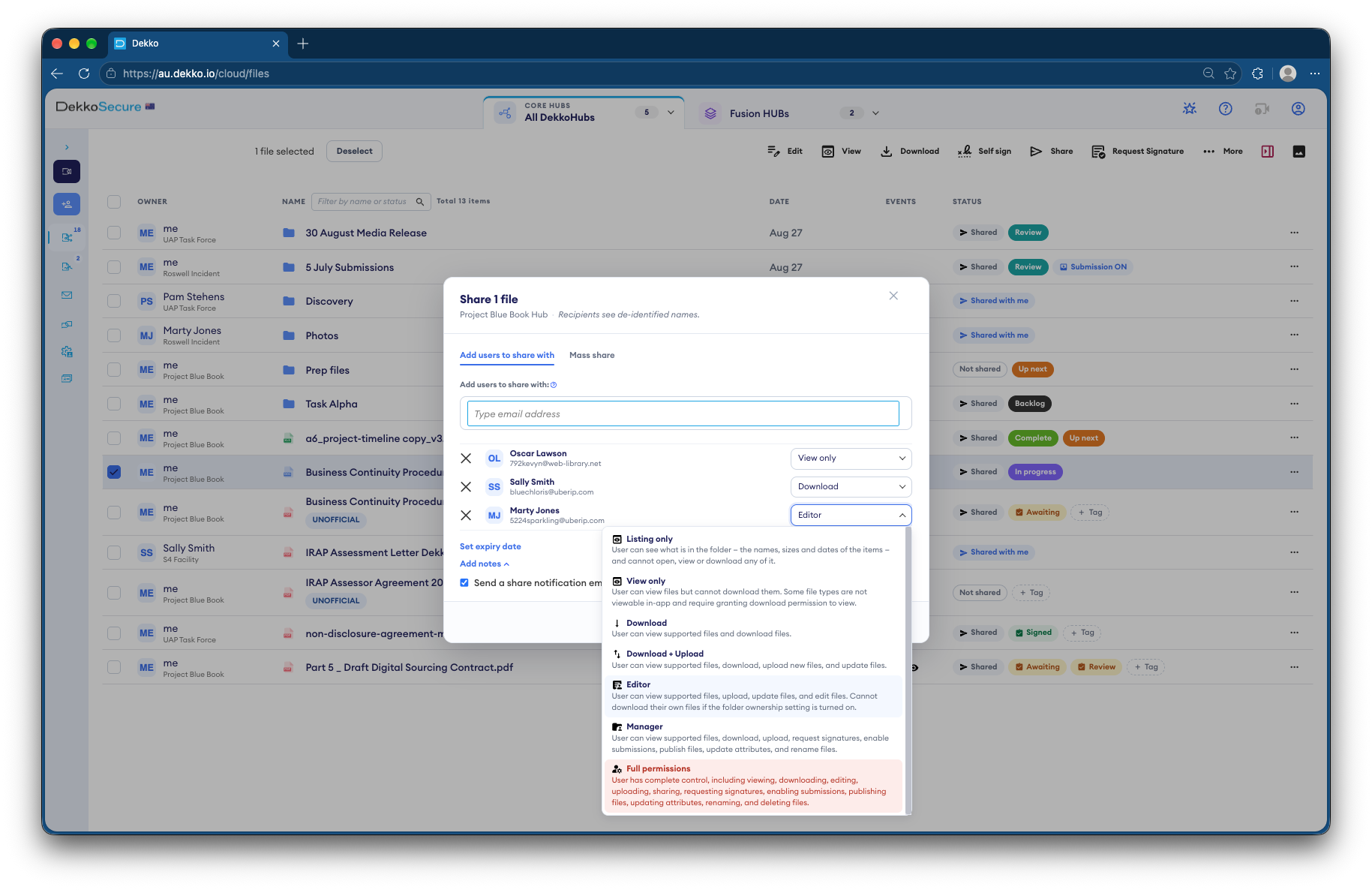
Share the folder with the members sitting on the panel at View only, until after the meeting.
- View only
- Access expiry
Step 4
Keep staff names out
With de-identified sharing on, recipients see an alias for each staff member.
- De-identified sharing
Step 5
Every view is recorded
Each file lists who viewed it and when, and members' access ends on its own.
- File history
- Access expiry
Who gets what access
A typical meeting. You can change or remove anyone's access at any time.
Board secretariat
Full permissions
Prepares the papers and collects submissions.
Members sitting on the panel
View only, until after the meeting
Read the papers without keeping copies.
Victims
Submission link
Send a statement in, and see nothing else.
The prisoner's representatives
A separate folder, if any
Never the victims' folder.
The bars show a permission level, from Listing only (one bar) to Full permissions (seven).
Questions
Can a victim see other papers through the submission link?
No. A submission link only takes uploads. The person sending can't see anything in the folder it leads to.
Is a victim's submission anonymous?
No. Victims usually identify themselves to the board, and the submission link also records the sender's IP address and approximate location, which the board's staff can see.
Can board members download the papers?
Not with View only. They read the papers in the browser, and their access ends on the date you set.
What does de-identified sharing do?
Recipients see a consistent alias for each of your staff instead of their name and email, so the people handling a file aren't identified to everyone it's shared with.
Do victims need an account?
No. A submission link works from any phone or computer, with no account or app, and you can print its QR code on a letter.
Preparing parole board papers?
Tell us how papers reach members and how victims send their submissions today. We'll show you the same process in DekkoCORE, set up for your board.